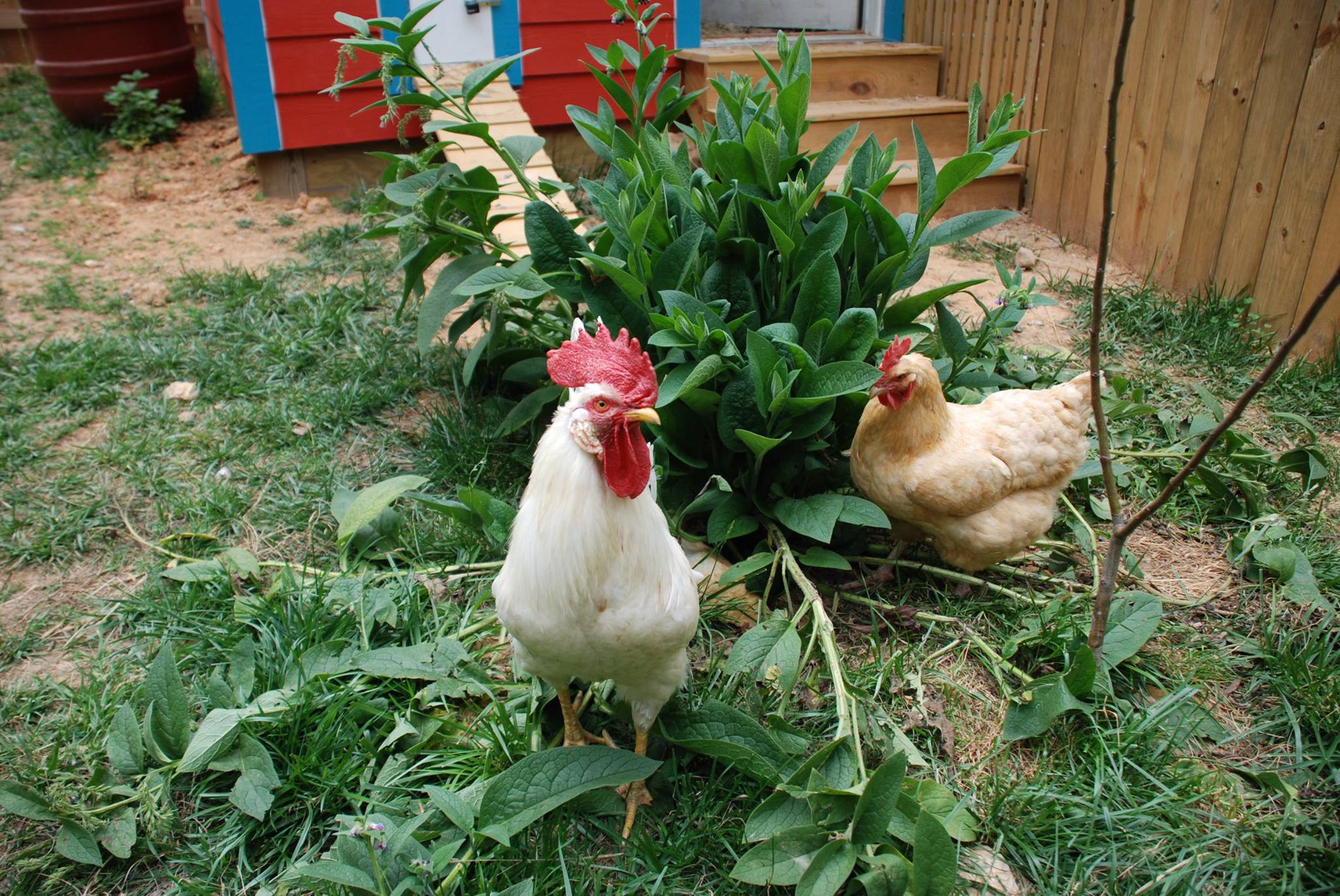
Diary of a Mother Hen: Now that she has grown

Harumi laid her first egg today. When Rosemary called to tell me the news, I felt the same kind of jolt to the heart and sting to the eyes that I felt when my son’s voice cracked for the first time.

The passage of time takes our babies away, and I think it is a rare parent who is completely ready.

This isn’t merely a case of baby grows up though. I looked at her egg and held it in my hand, and knew that to so many it would not be good enough. A first laying marks the beginning of a hen’s profitability to those who would gain from what is not theirs, and they would find our beautiful Harumi’s egg inadequate. A person clamoring for a breakfast of sunny side up or scrambled would scoff at just how poorly this egg would feed their appetite.

They wouldn’t see Harumi. They wouldn’t see the little chick who had grown into her yellow-green feet. They wouldn’t wonder how Harumi experienced the laying of her first egg. They wouldn’t cradle her egg in their hands as I did while feeling it to be a precious part of someone I love.

They would likely dash it to the ground in disgust.

http://instagram.com/p/qT7fi3gc8H/

I dashed it to the ground myself, but my intent was so very different. I gave her back her egg so she could eat it as chickens like to do. We don’t need her to be “economically viable.” We don’t need her to produce anything for us. We only want a life of health and comfort for her.

We will not take. We will only give. You’re safe with us, Harumi.

– Linda Nelson
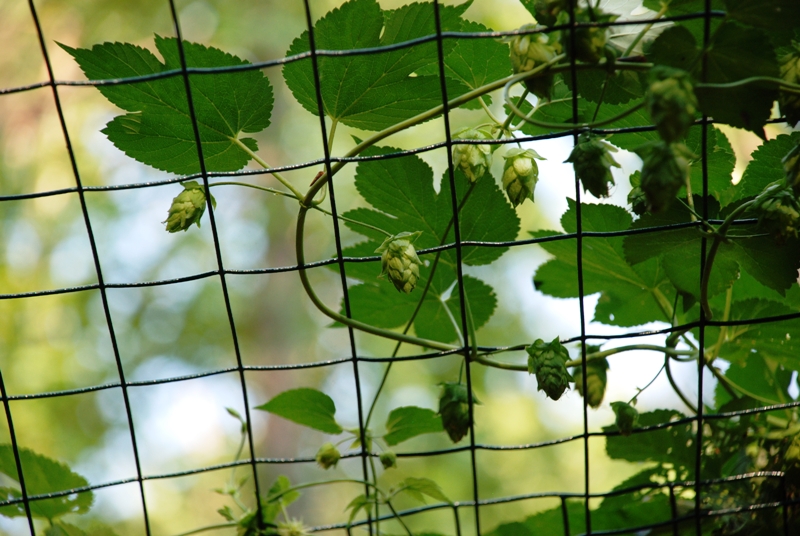
Plant Profile: Hop

HOP

Most of us know the HOP plant for its female variety’s flowers, hops. Some people love the bitterness added to beer by hops flowers during brewing, while some do not. Either way, the hop plant is a fun vine to have in your garden.

The hop plant is a native of the British Isles and is a perennial, each year sending out a new, fast-growing main vine that can grow up to 25 before it (and its many tendrils) die back. The famous (and splendidly useful) flowers have a conical shape and are light green in color when fresh but turn light brown when dried. The flowers have been used for almost six centuries during the beer-brewing process. But long before that, hop shoots were apparently eat much as asparagus is today! The flowers can also be used in a tincture or infusion to promote appetite and help with sleeping. (See more about its history, cultivation, and medicinal uses here: http://www.botanical.com/botanical/mgmh/h/hops–32.html.)

Our hop plants, pictured above, are creating a wall of green on our chicken enclosure. The chickens seem to enjoy the leaves very much, and the vigorous vines offer helpful shade from the hot summer sun. They can thus be cultivated like other viney flowering plants, such as morning glories, to provide a unique flower color to the garden. Just make sure they have something to climb (if left to roam on the ground, they seem to fare more poorly) and plenty of space to stretch their green legs.

So far we have not tried utilizing the flowers for any functional purpose, but perhaps one day we might try our hand at a Microsanctuary Microbrew with some of our very own hops. What about you?

Black Bean Hummus

Though there are those who would have you think that vegans only eat sticks, stones, and hummus, that is no reason not to enjoy this spicy and delicious food!

– Linda Nelson

Black Bean Hummus

Ingredients:

1 15 oz. can black beans
2 tablespoons lemon juice
2 tablespoons tahini
3/4 teaspoon cumin
1/4 teaspoon smoked paprika
1/2 teaspoon salt (or leave it out)
1/4 cayenne pepper
reserved liquid from beans
2 cloves garlic or to taste (I happen to live with a garlic fiend so I double the garlic. We will have no need to fear vampires!)

Directions:

Place the garlic in the bowl of a food processor, or chop by hand. Add all ingredients to the food processor or a blender except the reserved liquid. Process or blend until smooth. We like it with more texture, but choose what suits you. Add up to 3 tablespoons of the reserved bean liquid until you get the right consistency.

Scrape into a bowl and garnish with smoked paprika and Greek olives.

Lavender Mint Tea Cookies


Now that we have profiled both lavender and mint for gardening, I wanted to offer the recipe for these tender little cookies.

– Linda Nelson

Lavender Mint Tea Cookies

Ingredients:

1/4 cup vegan butter (check out the easy recipe on our website)
1/4 cup canola oil
1 1/4 cups powdered sugar
2 tablespoons fresh lime juice
2 teaspoons vanilla extract
1 1/2 tablespoons mint leaves, finely chopped
2 1/2 teaspoons culinary grade lavender (you can dry your own or purchase it)
2 1/4 cups all purpose flour
1/4 teaspoon baking soda
1/4 teaspoon baking powder
1/4 teaspoon salt.

Directions:

Preheat the oven to 350 F.

In a large bowl or a stand mixer cream together the vegan butter and oil. Add the powdered sugar in 1/2 cup portions so it doesn’t fly, and beat the mixture until smooth and airy.

Add lime juice, vanilla, chopped mint, and lavender, and mix until all is incorporated.

Sift in the flour, baking soda, baking powder, and salt, and mix until smooth. Drop by the tablespoon onto a parchment or silpat-lined cookie sheet, and bake for 11 to 13 minutes, or until the edges are just beginning to turn golden.

Transfer to a rack to cool. Enjoy!

Adapted from Cheers to Vegan Sweets by Kelly Peloza.

Plant Profile: Mint

http://instagram.com/p/p6gW4rgc6p/

Today’s plant profile is of MINT. Glorious, glorious mint. Mint is an ancient staple of the herb garden, and over time a great number of varieties have been developed. Along with the familiar peppermint and spearmint, you can find apple mint (pictured here–did you guess correctly?), orange mint, chocolate mint, pineapple mint, licorice mint, curly mint, and many many more.

Mint is a vigorously growing herb with mighty roots that have been known to bust pipes in the ground. The flowers are favorites of pollinators, which will benefit other flowering plants in your garden, and mint is also pest resistant (like many strong-smelling herbs) and thus a good companion plant. When growing your own, be sure to plan carefully to avoid mint taking over areas where you do not want it; once established, it sends out tendril-like runners and puts down deep roots, which can make it a challenge to control.

Mint is a common ingredient in everything from toothpaste to soap. It has been used throughout time to soothe the gastrointestinal system and other internal ailments, as well as being used externally for pain and inflammation. Learn more about mint’s medicinal usefulness here: http://www.webmd.com/vitamins-supplements/ingredientmono-705-PEPPERMINT.aspx?activeIngredientId=705&activeIngredientName=PEPPERMINT.

A more detailed article on the history of mint cultivation is available here: http://www.motherearthliving.com/health-and-wellness/herbs-for-health-medicinal-mint.aspx?PageId=1#axzz36nNzhbhg.

How do you use mint?

Plant Profile: Comfrey

10397044_520492771390287_3072107230767474593_o

Today’s plant profile is of COMFREY. Comfrey has big, vibrant green leaves that grow on plentiful stalks from one main taproot, as well as small flowers that go from light to dark purple.

You have likely seen many of our chicken residents hiding in, walking through, walking on, nibbling on, and generally cavorting in the comfrey plants we have in the chicken yard. Obviously pleasing chickens is one of the many benefits of growing comfrey.

But comfrey is also a pretty spectacular plant to have around your garden. Its deep taproot goes far down into the soil and pulls up many nutrients that shallower root-system plants may not get to. As the leaves and stalks mature, they fall over or off and start to decay on the ground, which provides an extremely nutrient-rich mulch–as you can see in this picture, gravity and age have gotten a helping hand from Orion and Amandine, and newer stalks are growing up from the same single plant’s root. This mulching ability makes comfrey a perfect companion for fruit and other trees.

Another way for gardeners to use comfrey is to make comfrey tea as a liquid fertilizer. Just take some of the leaves, chop them up into semi-large pieces, and simmer them in water for a few minutes until it is dark greenish-brown. Let it cool and then pour around plants. You can also chop up a few leaves and soak them in water for a few weeks, which will preserve more of the nutrients in the leaves.

Comfrey can be used by humans as well as chickens and plants! Although it has been used orally for centuries, the FDA has recommended that it not be ingested. However, it can be safely used as externally a compress or salve to treat wounds, joint inflammation, and other problems (read more at http://www.webmd.com/vitamins-supplements/ingredientmono-295-COMFREY.aspx?activeIngredientId=295&activeIngredientName=COMFREY).

Plant Profile: Nasturtium

http://instagram.com/p/pM4fLEAcy3/?modal=true

Our love for NASTURTIUMS runs deep here at Triangle Chance for All. A prolific vining plant, nasturtiums come in a range of warm flower colors, from red to orange to yellow.

Besides their beauty, nasturtiums are great plants to have around your garden. They are aphid magnets, attracting them away from your other plants that are susceptible to aphids (which is a useful way to approach insect control, rather than spraying toxic petro-chemicals around your yard).

The seeds, buds, flowers, and even leaves are edible. The flowers and buds are particularly tasty, adding an unusually (for flowers) powerful peppery punch to salads and other dishes.

Here is an easy salad & vinaigrette recipe you can make using the petals and flowers–along with other edible flowers like marigolds or geraniums: http://www.vegetariantimes.com/recipe/mixed-green-salad-with-nasturtium-vinaigrette/.

Plant Profile: Lavender

http://instagram.com/p/pGoD0JAc42/?modal=true

Triangle Chance for All loves plants, too! We will be featuring a number of our vegetative residents at the Microsanctuary to help inspire you to grow more of your own plant-based foods. Our first featured edible plant is LAVENDER.

Lavender is one of our favorite herbs to have around the yard and the house. Both its flowers and leaves can be used in cooking, and it has medicinal properties as well. It has traditionally been used to soothe the nervous and digestive systems, whether by consuming it, using it on the skin, or through aromatherapy (see more about its uses at http://www.webmd.com/vitamins-supplements/ingredientmono-838-LAVENDER.aspx?activeIngredientId=838&activeIngredientName=LAVENDER).

Lavender is also a beautiful plant that is relatively easy to grow in well-drained, sunny spots. It comes in a variety of types, each with its own different color, ranging from a deep dark purple to white! We have had good luck with it being deer resistant so far.

Here are a couple of fun ways to use lavender in your kitchen.

Lavender Lemonade: http://www.skinnylimits.com/lavender-lemonade/

Lady Grey Muffins: http://sunberrybaking.com/2013/06/19/vegan-recipe-shares-lady-grey-muffins/

How do you use lavender?

Morning Juice Blend

Not all of us find it easy to eat greens so for those who find it hard, we’re offering two delicious recipes today. Check back for a snack recipe later today.

Here is my favorite morning juice all ready for breakfast out on the deck. It’s made from 2 handfuls of spinach, 2 sticks of celery, and 2 oranges. I love lime so I add a splash of it to this, too. Yum!

– Linda Nelson

Homemade Vegan Deodorant

And, now for something completely different in the recipe department! Please don’t try to eat this.

While it is possible to find vegan deodorant with no animal ingredients and that has not been tested on animals, why not make your own? You’ll save a bundle, and you’ll be able to choose the scents that please you.

– Linda Nelson

Homemade Vegan Deodorant

Ingredients:

1/4 cup cornstarch
1/4 cup baking soda
5 tablespoons organic refined coconut oil
10 drops therapeutic grade rosemary essential oil
10 drops therapeutic grade spearmint essential oil
Container/s to fill

Directions:

Place the coconut oil and essential oils in a food processor, slowly add the baking soda and cornstarch, and process until smooth. You can use a hand mixer if you don’t have a food processor, or even use some elbow grease to do it by hand. Pour into your containers, and place in the refrigerator for awhile until it is solid.

You may want to store this in the fridge during the really hot months. It will work when it is melted, but it will be messy. Apply a couple of minutes before you dress so that the oils penetrate your skin and don’t stain your clothing.

Play around with essential oils to get the scent you like. I was inspired by a commercial rosemary/mint product that I just love.